Weekly Overview of CFD Movements - 17/06/2019 - 21/06/2019
June 19, 2019
June 19, 2019
Risk Disclaimer: The example below is for illustrative purposes only and is based on price movements derived from Contracts for Difference (CFDs). The calculations reflect hypothetical outcomes using historical or specified price data for the relevant instrument on the stated date and are not indicative of future performance. Any reliance placed on this material is strictly at the user’s own risk.
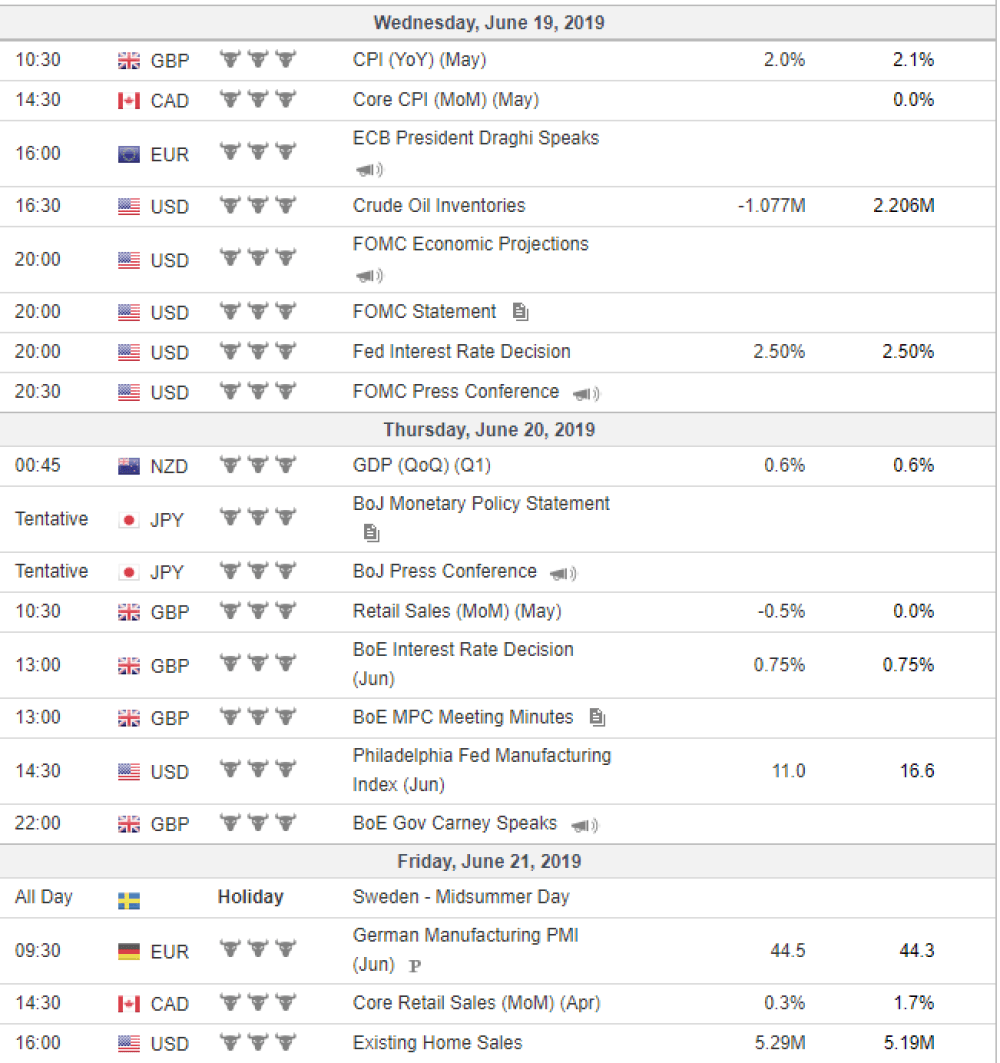
The euro weakened last week against the dollar in spite of expectations of a possible rate cut in the second half of this year, which put the dollar under pressure. On Tuesday, European Central Bank President Draghi surprised markets by outlining that additional stimulus was needed and opened the door for more rate cuts.
The British pound fell to fresh six-month lows as the first round of the Tory leadership contest showed great support for hard Brexit candidate Boris Johnson.
The Japanese yen remained flat against the dollar ahead of the Bank of Japan monetary policy meeting on Thursday. The massive stimulus program will probably not be abandoned any time soon.
Gold prices strongly rose last week. The prospect of rate cuts this year in the US made the yellow metal more attractive to investors.
U.S. stock indexes rose last week in anticipation of a more dovish Fed before its highly awaited policy meeting this Tuesday and Wednesday. Some analysts are now predicting as many as three rate cuts this year, although rates are expected to remain at their current level of 2.5 percent this month.
Oil prices fell last week. Signs that global oil demand will be hit by the U.S.-China trade war are putting pressure on oil prices. The IEA warned that oil demand in 2019 will be lower than expected. OPEC and non-OPEC states plan to hold their ministerial meetings on oil output policy on July 10-12. Support for oil prices last week came as tensions between Iran and the United States mounted since last Thursday when two oil tankers were attacked in the Oman Gulf.
The US dollar Turkish Lira currency pair moved higher in a volatile week, as the Turkish Central Bank kept its key interest rate at 24 percent and annual inflation fell to a nine month low.